
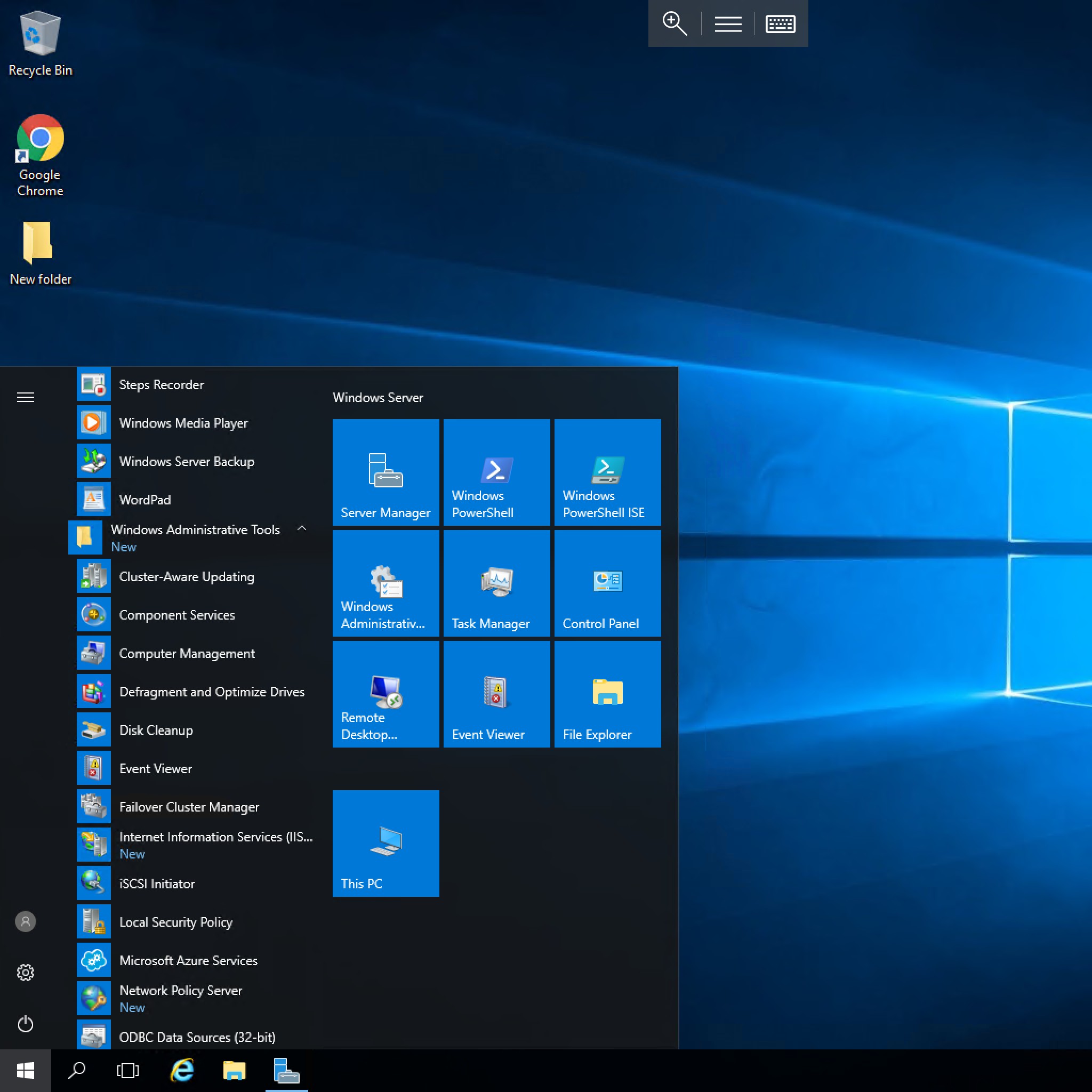
Microsoft Windows Server 2016
2016, October 12
Windows Server 2016 is the eleventh major version of the Windows NT operating system produced by Microsoft to be released under the Windows Server brand name. It was developed alongside Windows 10 and is the successor to the Windows 8.1-based Windows Server 2012 R2. The first early preview version (Technical Preview) became available on October 1, 2014 together with the first technical preview of System Center. Windows Server 2016 was released on September 26, 2016 at Microsoft's Ignite conference and reached general availability on October 12, 2016.
It was succeeded by Windows Server 2019 and the Windows Server Semi-Annual Channel, which was released in 2017. Mainstream support for Windows Server 2016 ended on January 11, 2022, and extended support will end on January 12, 2027.
Features
Windows Server 2016 has a variety of new features, including
Active Directory Federation Services: It is possible to configure AD FS to authenticate users stored in non-AD directories, such as X.500 compliant Lightweight Directory Access Protocol (LDAP) directories and SQL databases.
Windows Defender: Windows Server Antimalware is installed and enabled by default without the GUI, which is an installable Windows feature.
Remote Desktop Services: Support for OpenGL 4.4 and OpenCL 1.1, performance and stability improvements; MultiPoint Services role (see Windows MultiPoint Server)
Storage Services: Central Storage QoS Policies; Storage Replicas (storage-agnostic, block-level, volume-based, synchronous and asynchronous replication using SMB3 between servers for disaster recovery). Storage Replica replicates blocks instead of files; files can be in use. It's not multi-master, not one-to-many and not transitive. It periodically replicates snapshots, and the replication direction can be changed.
Failover Clustering: Cluster operating system rolling upgrade, Storage Replicas
Web Application Proxy: Preauthentication for HTTP Basic application publishing, wildcard domain publishing of applications, HTTP to HTTPS redirection, Propagation of client IP address to backend applications IIS 10: Support for HTTP/2
Windows PowerShell 5.1
Windows Server Containers